
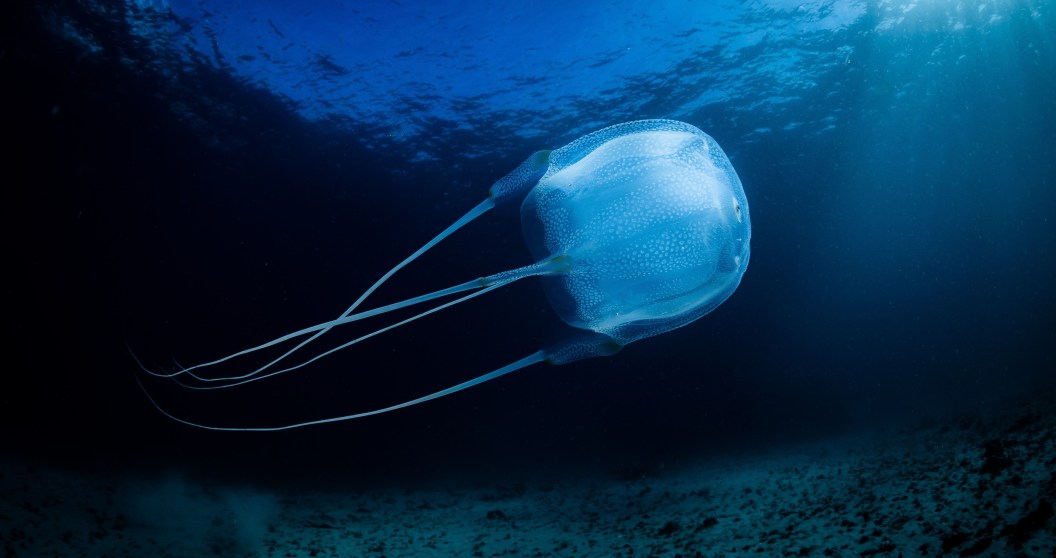
Nature can be surprising and even scary at times. Take this strange but kind of cool situation involving jellyfish at a nuclear power plant. Workers were surprised when four reactors at the Gravelines nuclear power plant in Ford, France, started experiencing problems.
However, upon further inspection, they determined that a swarm of jellyfish had impacted the nuclear reactors at the power plant. They found the aquatic animals inside of the cooling systems for the plant. What the animals were doing there is anybody's guess. But officials believe rising water temperatures may be to blame for the jellyfish swarm.
The jellyfish impacted production at the pumps. Three of the Gravelines reactors stopped working. This was due to the filter drums becoming packed with the animals. A day later, a fourth reactor also stopped working. According to The New York Times, the swarm of jellyfish caused the entire nuclear power plant to suddenly halt its production. Fortunately, it was only a temporary measure.
Jellyfish In A Power Plant
With the nuclear power plant producing 5400 megawatts of power, it is one of the largest in France. So any kind of delay will have impact on the surrounding area. Fortunately, the jellyfish didn't cause any lasting damage to the plant. Workers will clean out the filter pumps from the animals and will resume production.
A canal connected to the North Sea cools the power plant. Warmer waters have increased the species in the North Sea.
"Jellyfish breed faster when water is warmer, and because areas like the North Sea are becoming warmer, the reproductive window is getting wider and wider," David Wright, marine biology consultant at the National Oceanic and Atmospheric Administration Fisheries, said, per Reuters.
"Everyone talks about nuclear being clean but we don't think about the unintended consequences of heat pollution," Wright continued. "Jellyfish can also hitch rides on tanker ships, entering the ships' ballast tank in one port and often getting pumped out into waters halfway across the globe."
It's not the first time that something like this has happened. In 2011, the species shutdown powerplants in Isreal, Scotland, and Japan for instance. They can be a common but annoying issue.

