
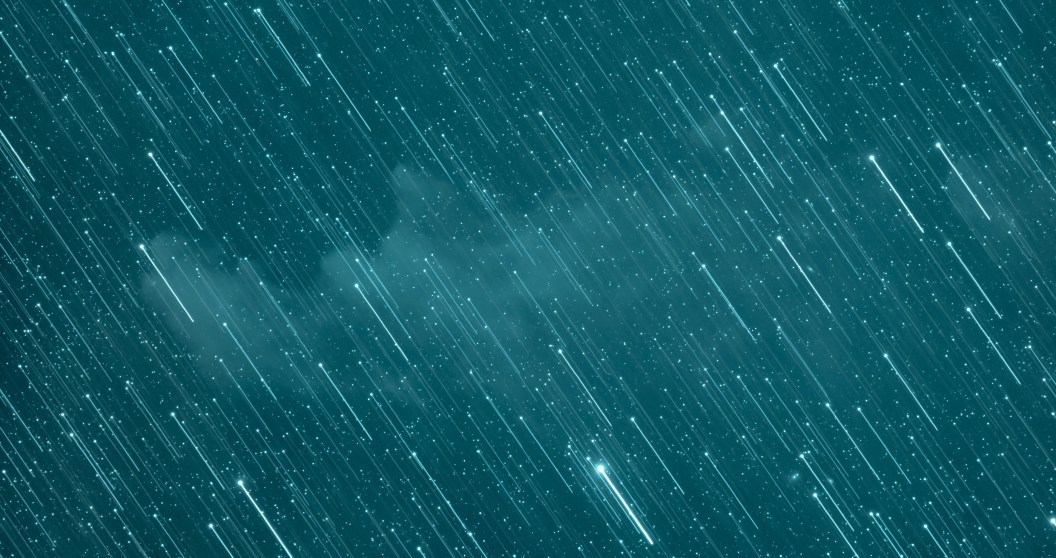
It appears that 2026 will start off with a bang. According to the American Meteor Society, some exciting things will be happening this weekend. Across the darkened skies, we may get the chance to witness a meteor shower and a supermoon.
January 2206 Brings Meteor Shower And A Supermoon
The American Meteor Society shared details about this exciting time. They share that the Quadrantids meteor shower is currently active and has been since December 28th. Although this meteor shower continues through January 12th of the new year, the next peak will occur on Jan 2-3, 2026 night. Additionally, the American Meteor Society shared that while the Quadrantids "have the potential to be the strongest shower of the year," they expect the results to fall short. That is mainly due to the "short length of maximum activity (6 hours) and the poor weather experienced during early January."
Nevertheless, you should be able to watch this stunning meteor shower with the naked eye. While these meteors typically lack "persistent trains," they "often produce bright fireballs," which can be a joy to watch. Additionally, the society warns that the meteors are not typically well seen from the southern hemisphere. In addition to the stunning meteor shower, January 2026 also brings another exciting treat, a supermoon. During the peak of this shower, the moon will be 100% full. While that can be a treat all in itself, the brightness of the moon will obscure all but the brightest meteors.
What Is A Supermoon?
We have all heard of a full moon, but what exactly is a supermoon? NASA explains it beautifully. First, they explain that the moon's path is not a perfect circle. There are times during its orbit when it is closer or farther from Earth. A supermoon needs two things: a full moon and proximity to the Earth. NASA states, "A 'supermoon' occurs when a full Moon coincides with the Moon's closest approach to Earth in its elliptical orbit, a point known as perigee. During every 27-day orbit around Earth, the Moon reaches both its perigee, about 226,000 miles (363,300 km) from Earth, and its farthest point, or apogee, about 251,000 miles (405,500 km) from Earth."
These brilliant moons only happen about three to four times a year. So the fact that January 2026 is welcoming both a supermoon and a stunning meteor shower can hopefully only mean good things.

