
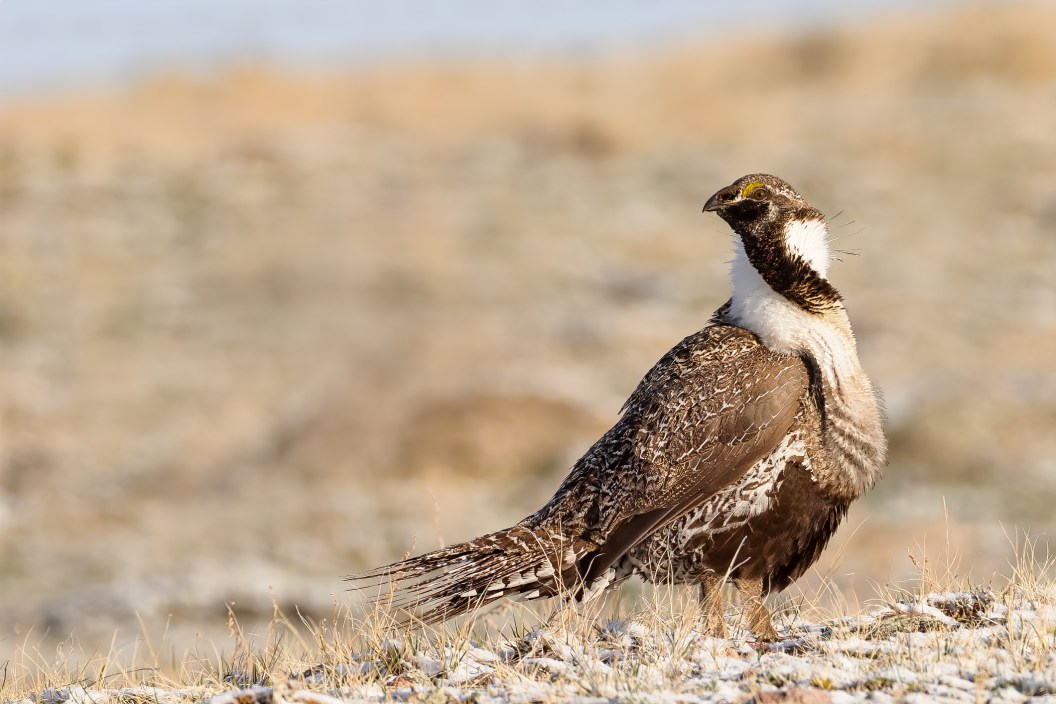
Researchers are ringing the alarm bells over a bird species that has gone virtually extinct in North Dakota. The greater sage grouse only exists in 11 states. But you can soon mark North Dakota off the map. Biologists failed to find any male birds during a recent population census.
Without males, that would make the bird species practically extinct in the state.
"This is the first time ever we were not able to find any male sage grouse at active leks in North Dakota," Jesse Kolar, North Dakota Game and Fish Department upland management supervisor, told E&E News in early July.
Rewind to 2024, and researchers flagged the problems with the habitat. They found only two remaining active leks or clearings in the North Dakota desert. These leks are important to the bird species as a place where the sage grouse goes to mate in the spring. They also found only 3 males in 2024 at these leks. Fast forward to 2025, and there were none. That means the bird species isn't mating.
North Dakota Bird Species Gone
Researchers say that any males would have come to the leks if they were alive. They are intensely loyal to the areas. It's a sad discovery but not entirely unexpected. The birds have been about 250 in number or less since the 1990s. They fell dramatically to 31 in the 2010s.
Researchers believe habitat fragmentation from agriculture and development led to the decline in numbers. Likewise, West Nile Virus devastated the species as well.
Sadly, the species appears to be going away in the state. However, they remain thriving in Wyoming thanks to its ability to manage weeds where sagebrush grows. It prevents non-native grass like cheatgrass from growing.
"Most of the cheatgrass seed that is introduced in the system will germinate in the first five years. If we can have success past five years, there might not be any more residual seed there. Then, we're winning the game at that point," Julie Kraft, Sublette County weed and pest supervisor, told Outdoor Life. "It's incredibly rewarding to come out and see huge ridges without any cheatgrass, and its success that's long term."

