
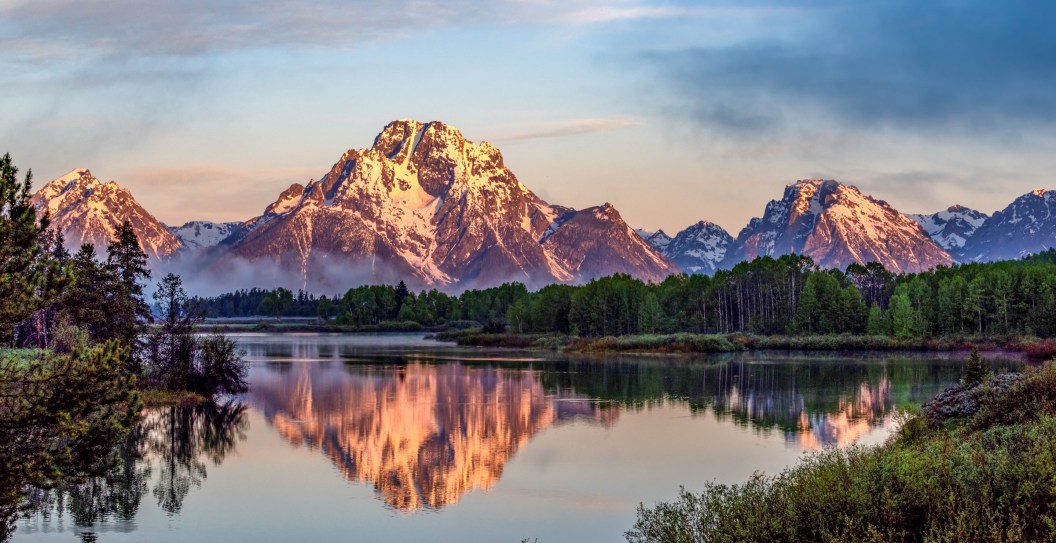
Guests staying at the ever-popular Grand Teton National Park may have accidentally exposed themselves to a deadly virus. Wyoming public health agencies discovered a bat colony inside one of the lodges at the park.
Now, they're carrying out rabies risk assessments on the animals, according to the Grand Teton National Park website. Officials found the bat colony in the attic of Jackson Lake Lodge and restaurant. The colony was positioned above eight guest rooms. Additionally, there had been eight reports of guests coming in contact with bats in June.
Grand Teton National Park closed the affected rooms, but the risk of guest exposure for those who visited previously remains. There were more than 230 bookings between May and July. Each booking likely carried multiple guests as well. Wyoming state public health veterinarian Emily Curren told SFGate that the bats captured from the colony tested negative for the disease.
Grand Teton National Park Bats
However, that doesn't mean the risk of rabies is nonexistent.
"The whole reason we're doing this outreach investigation is because we can't rule out rabies with 100% confidence," Curren said. "We are reaching out to people to assess them individually under the sort of governing principle that rabies would be the worst-case scenario."
Meanwhile, the Wyoming Department of Health sent affected guests a questionnaire to determine their risk of exposure. Ultimately, they may recommend getting rabies shots if guests fall into a certain category. Rabies is highly deadly once contracted. So officials are treating this with high importance.
However, Curren reminds guests that Grand Teton National Park is a national park. It's hard to stop situations with wildlife from occurring. They can only address it when it happens.
"I think it's impossible to basically prevent something like this from ever happening again," Curren said. "You're talking about a national park where bats are wild animals and are allowed to do their normal wild animal thing. But we're working with the park so that they feel like they've got a better way to help mitigate stuff like this from happening in the future, and communicating to guests potentially more comprehensively going forward."

