
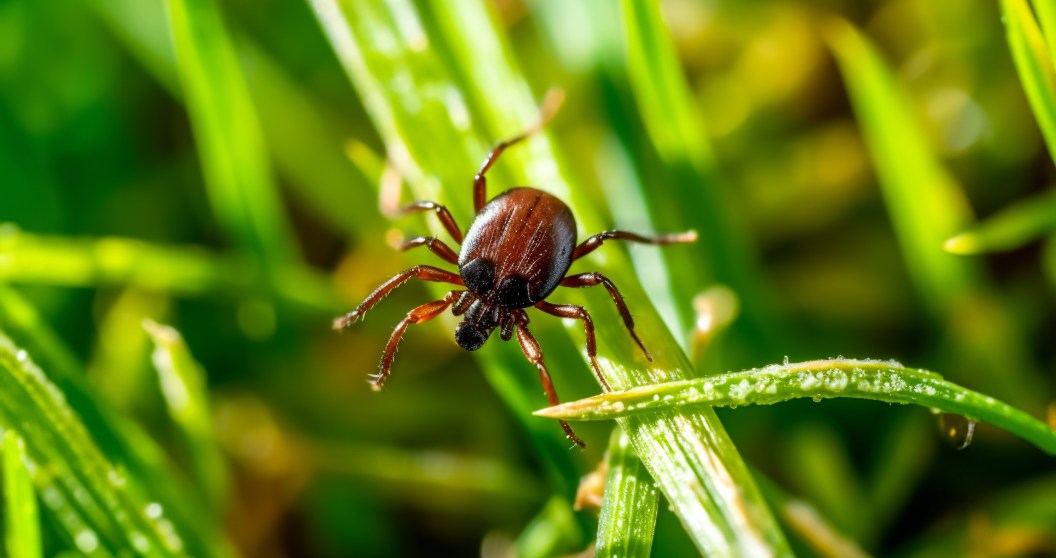
A newborn is fighting for her life after being bitten by a small tick. It transmitted a rare but devastating virus.
At just 5 weeks old, little Lily is dealing with a potentially deadly virus. Her mother and aunt had gone on a walk near their home on Martha's Vineyard. Although she was covered in a blanket, a tick landed on the newborn.
"I found this tiny, tiny, tiny, the teeniest [tick], on her ankle," Tiffany told WCVB Channel 5 Boston.
Unfortunately, the newborn's health began to decline after the tick bite. She was transported o Massachusetts General Hospital in Boston for care where she started having seizures and struggled to breathe. Doctors believe the tick had the Powassan virus. It's a rare but potentially deadly diesease that causes headache, fever, and weakness. Unfortunately, only supportive care is available for the virus.
Tick Transmits Virus
On GoFundMe, the family wrote about their situation.
They wrote, "Last week baby Lily was brought to the ER with a consistent fever. She was then flown to Mass General for advanced medical care. Where sadly Lily continued to get sicker. Lily was observed nonstop and any and all tests were run to try to solve the mystery of where her fever was coming from. While waiting for test results and taking antibiotics Lily had a series of seizures. This sadly landed her in the PICU. While she has the best medical team in Boston her parents haven't left her side. Rose is being very well taken care of on island by family while Lily continues to fight everyday There is so much yet unknown. We're praying everyday for Lily's health."
Speaking to ABC News, Dr. Catherine M. Brown, a state epidemiologist for the Massachusetts Department of Public Health, opened up about the tick virus. She said that they're increasing testing for the Powassan virus.
"Most people exposed to tick-borne viruses don't get sick, but it is a virus that can invade the central nervous system and so a small proportion of people that are exposed become severely ill," Brown said. "In the past, testing for Powassan virus was only available through the CDC, but in recognition of the importance of this virus, the Massachusetts Department of Public Health's State Public Health Laboratory can now perform the initial screening test and confirmatory testing is still performed at CDC. Data from tick testing suggests that fewer than 2% of black-legged (deer) ticks carry the virus in Massachusetts."

