
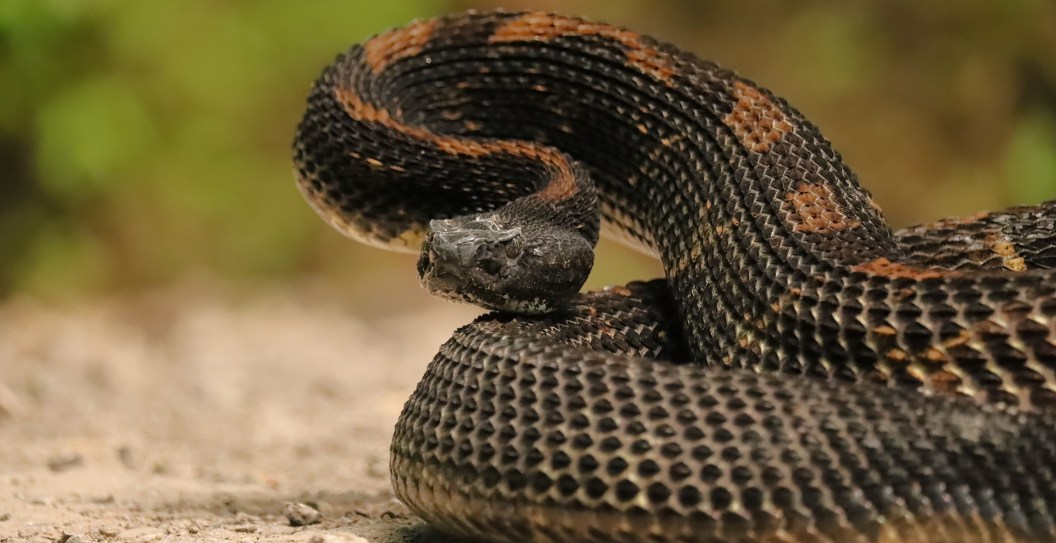
Thousands are turning out to Illinois for a massive snake crossing at Forest Service Road No. 345. However, many know it as Snake Road. The two-and-a-half-mile road stretches through Shawnee National Forest in the state.
For the last half-century, the national park has closed the road at times for a massive snake crossing. The national park houses 60 percent of the state's snake population.
Every fall and spring, the snakes migrate along the road. The migrations take place in the fall, between September 1 and October 30, and spring, between March 15 and May 15. More than two dozen species of snake travel along the road twice a year between their winter and summer habitats.
Local wildlife biologist Mark Vukovich told the Belleville News-Democrat, "To mitigate vehicle collisions with snakes, the road closure began in 1972 and has been an annual tradition every year since."
Snake Crossing
The event draws thousands of people very year.
"Thousands of people each season come here to see it, and just walk," Vukovich said. He also says the snakes are "most active in their movement when high temperatures are around 70 to 80 degrees and the low temperatures at night hover in the 50s."
If you are planning to watch the snake crossing, then be careful. He's seen more than 44 different snakes in just a couple of hours. These include several venomous snakes such as the cottonmouth.
"It's possible you could see zero snakes on your hike, though that's more likely if you're moving too quickly. You can better your chances of spotting snakes by walking slowly and keeping a close eye on the grass in the center of the road, as well as both edges of the road," said Vuckovich.
It's certainly a unique area for sure.
"LaRue-Pine Hills' unique physical characteristics dictate and support a rich biodiversity not found anywhere else in the country. In all, the area covers about 4.5 square miles (3,547 acres) and contains 14 natural communities, including forests, wetland, prairie, glade, and barren ecosystems and geologic features," writes the USFS of the national park.

