
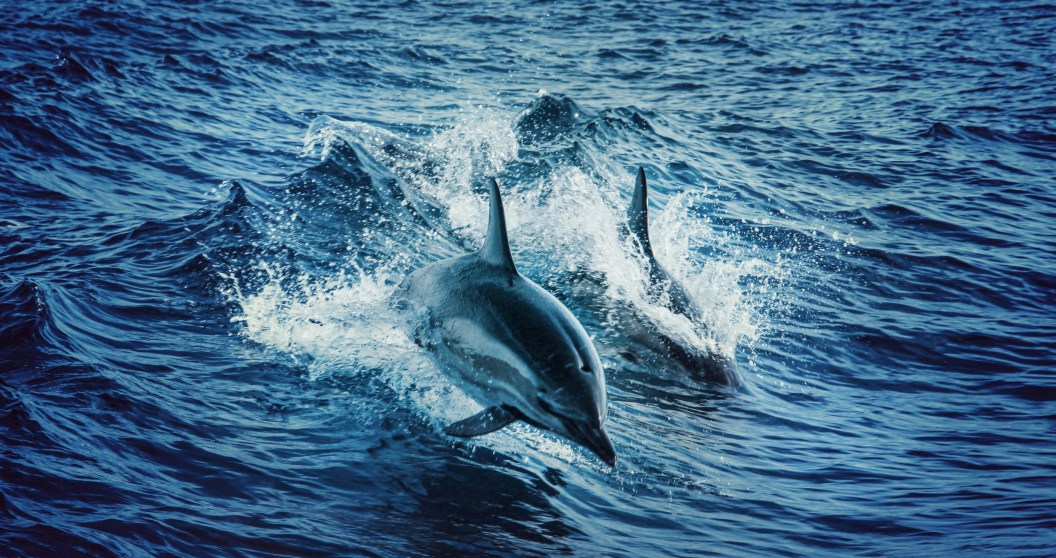
Scientists in Jackson may be on their way to finding the cure to Alzheimer's. Researchers at Brain Chemistry Labs have been studying dolphin brains. They are doing this as part of their quest to cure Alzheimer's, and what they discovered was astounding.
Scientists Study Dolphin Brains To Cure Alzheimer's

Shutterstock Image
Cowboy State Daily shared some details from this exciting new development. Apparently, dolphins have been dying off the coast of Florida. When 10 people showed up dead again, their brains were sent to a research institute in Jackson, Wyoming. The goal was to try to find some answers. The study and its findings were shared in Nature Communications Biology.
What the study found was astounding. Cowboy State Daily shares that, "The study found a link between Alzheimer's disease, cyanobacterial blooms, and the brains of dolphins." The dolphins that had been exposed to these colonies of blue-green algae full of toxins showed all the "hallmarks of Alzheimer's disease."
While learning that dolphins suffer from cognitive decline from this toxic algae may seem frivolous, researchers promise it is not. As scientists are busy making these connections, they are hopeful that they may also begin to find cures from studying these dolphin brains. Paul Alan Cox, executive director of Brain Chemistry Labs, shared, "Once you know what causes it, you can try to look for a cure."
What's The Connections
Although dolphin brains and human brains are vastly different, researchers are still learning a lot. Cox shared that the most valuable takeaway from studying the dolphin's brains was learning that "there is a connection between cyanobacterial blooms and the Alzheimer 's-like neurodegenerative disease afflicting dolphins." More simply put, these animals are living in severely polluted environments, and it is having negative impacts on their cognitive function.
Similarly, he shared that scientists were shocked at how similar the damaged brain tissue in the dolphins was to that of humans with Alzheimer's. "On a microscopic level, they're virtually indistinguishable." In addition, their nervous system structure is similar to humans as well. Thus, if the pollution is affecting the dolphins in this way, it is safe to assume it could affect people as well.
"We think these cyanobacterial toxins are causing Alzheimer's, and they're moving past tens of thousands of Floridians," Cox said. "Our research found that these toxins can be aerosolized. While that sounds terrifying, we should count it as a win. By studying these dolphin brains and further understanding the connections, we can hopefully develop a cure for Alzheimer's.

